
< Home
Coraline (2009)
Fantasy/Family/Animation
“An adventurous girl walks through a secret door in her new home and discovers a strangely idealized version of her frustrating home, but it has sinister secrets.”
Duration: 1h 40m
Release date: 8 May 2009 (UK)
Director: Henry Selick
Adapted from: Coraline by Neil Gaiman
Art directors: Phil Brotherton, Dawn Swiderski, Lee Bo Henry, Tom Proost
Box office: 124.6 million USD
Distributed by: Universal Pictures, Focus Features, Universal Pictures Home Entertainment
⭐️⭐️⭐️⭐️⭐️

Henry Selick
This film often gets confused for a Tim Burton movie. The Gothic themes and eccentric protagonist are reminiscent to those in films such as ‘Edward Sissorhands (1990),’ ‘The Nightmare Before Christmas (1993),’ ‘Beatle Juice (1988)’ and ‘Corpse Bride (2005).’ Oddly enough, Tim Burton was not involved with the creation of this movie at all. It was directed and adapted all by Henry Selick.
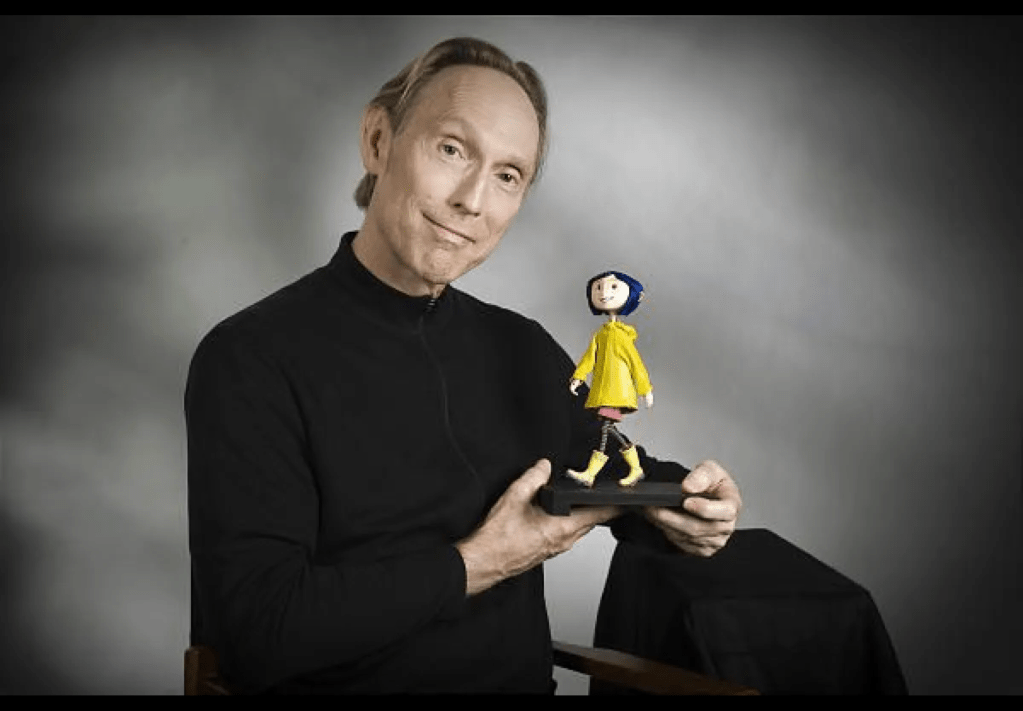
You may remember the movie ‘James and the Giant Peach (1996)’, this was directed by Selick and has very similar animation and musical elements from ‘Coraline (2009).’
After working on ‘The Nightmare Before Christmas (1993),’ ‘James and the Giant Peach (1996) and ‘Monkeybone (2001),’ Henry Selick would now have the opportunity to make one of the most loved animated movies of all time. Selick used his past animation experience and brought life to ‘Coraline (2009)’ which was originally a dark fantasy horror children’s story written by Neil Gaiman.
All the characters were crafted by hand. With the help of 500 people, it took well over 4 years to finish this movie.

A total of 15,000 replacement faces were created for all the characters in the film, each one of which had to be hand-sanded and hand-painted. Coraline alone had over 6,300 face replacements.
LAIKA Studios
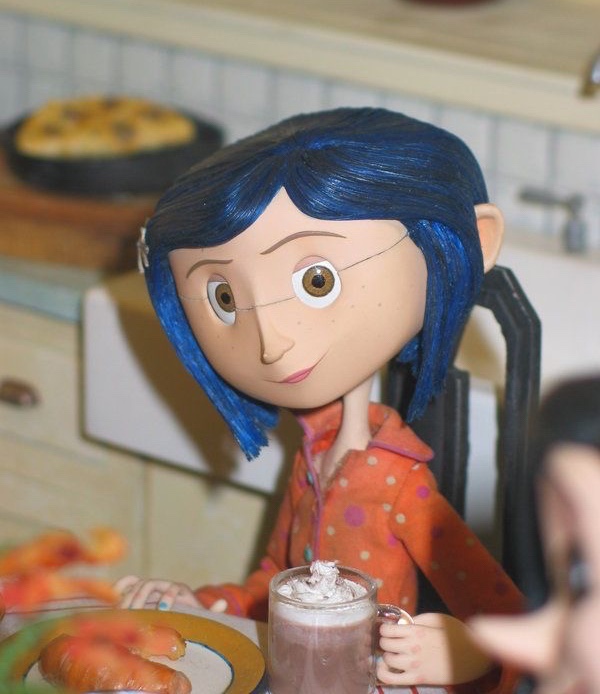
Coraline had 28 identical puppets, the main one of which stood 9-3/4 inches tall. A total of 15,000 replacement faces were created for all the characters in the film, each one of which had to be hand-sanded and hand-painted.
– LAIKA Studios
Colour & Art Style
In the movie, Coraline can be seen wearing her iconic yellow raincoat which contrasts her blue hair. My theory is that Coraline accidentally caused her mother to crash her car. Coraline then asked her father if she could dye her hair so her mother would notice her more. But her mother did not like this. Or maybe the shock of her daughter dying her hair blue was the cause of the accident.
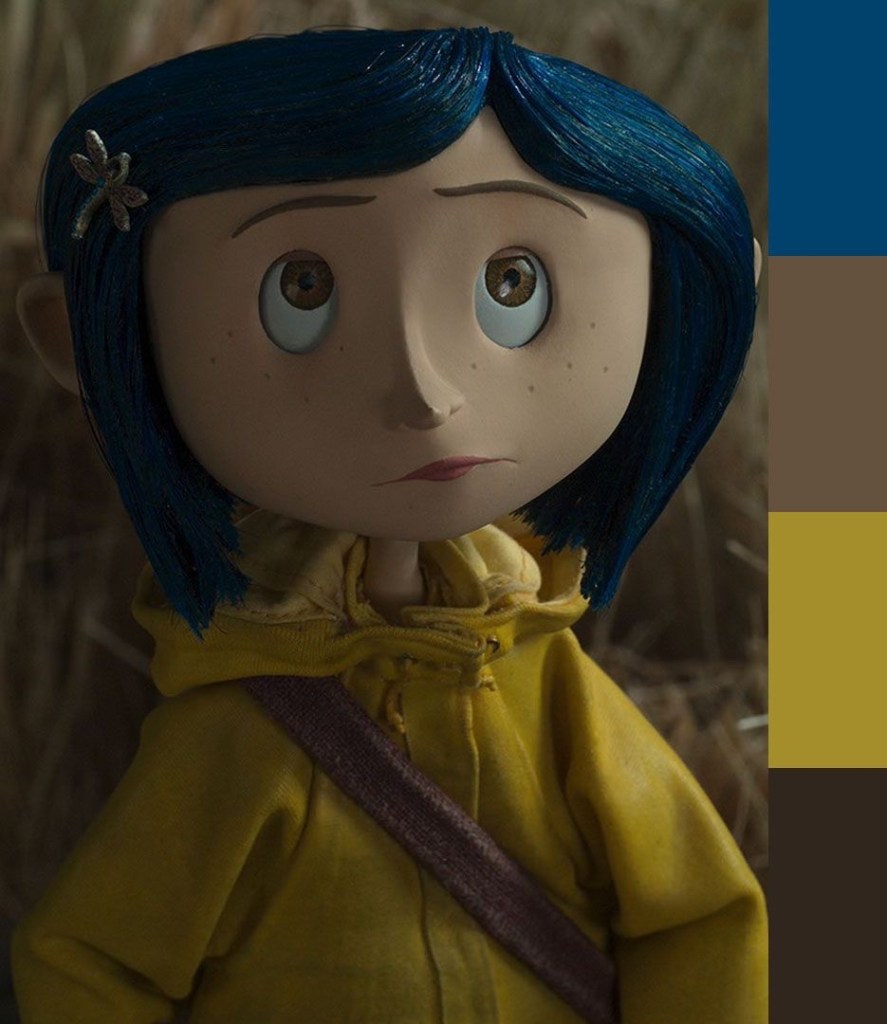
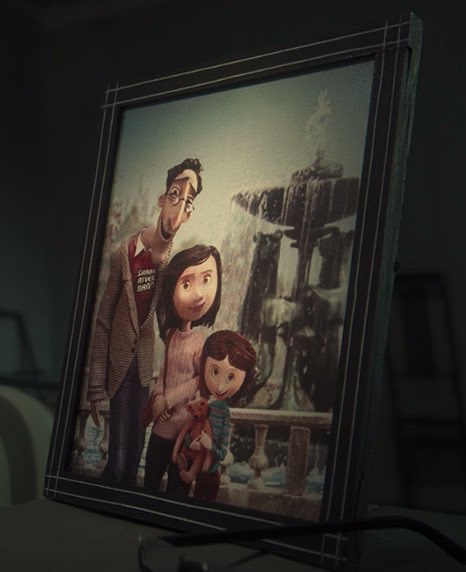
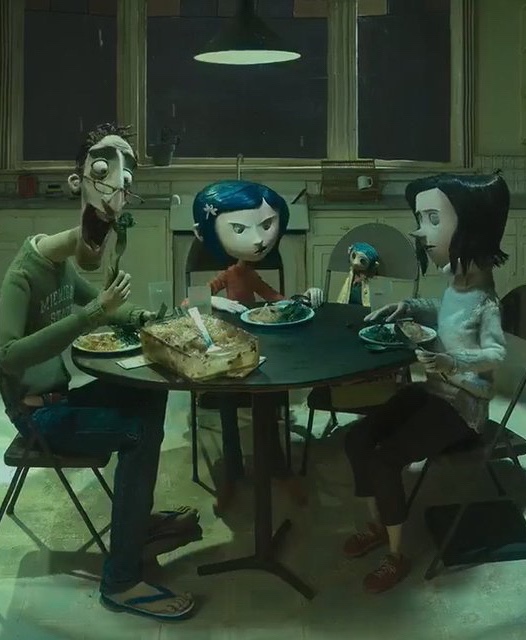

Surprisingly, there is a lot of colour in this movie:
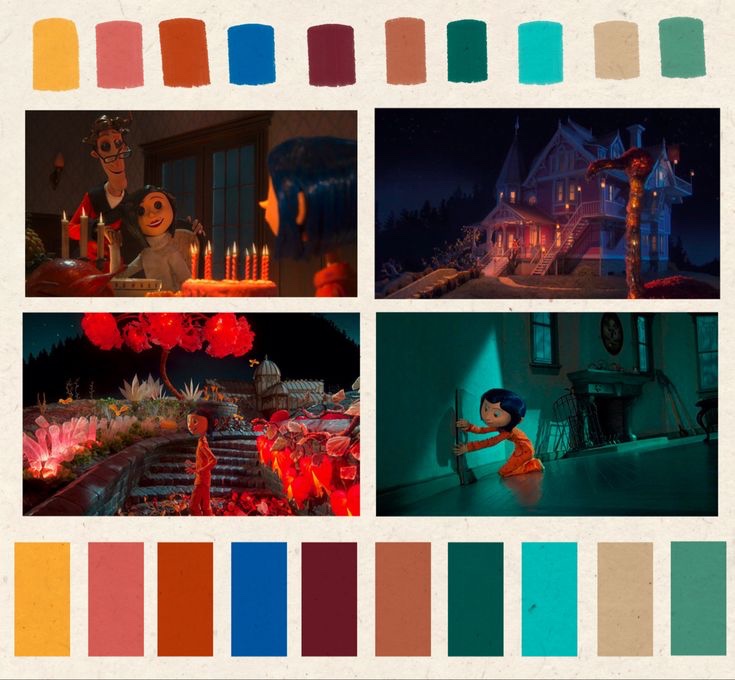
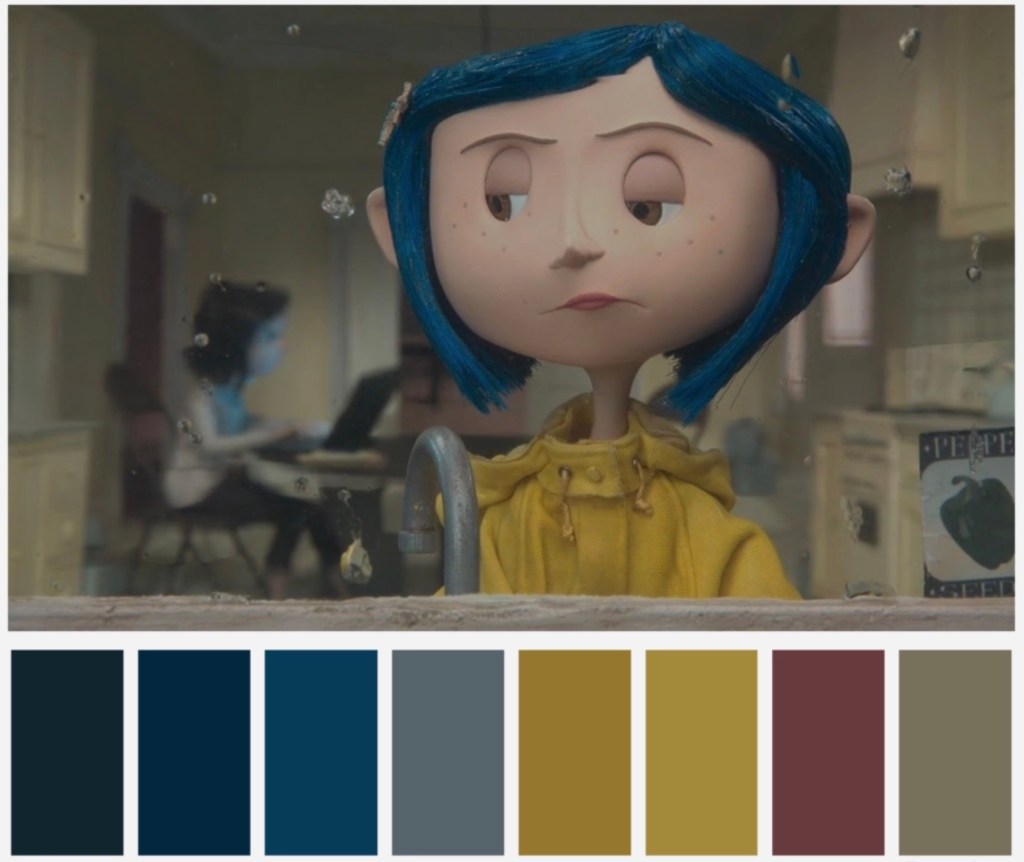
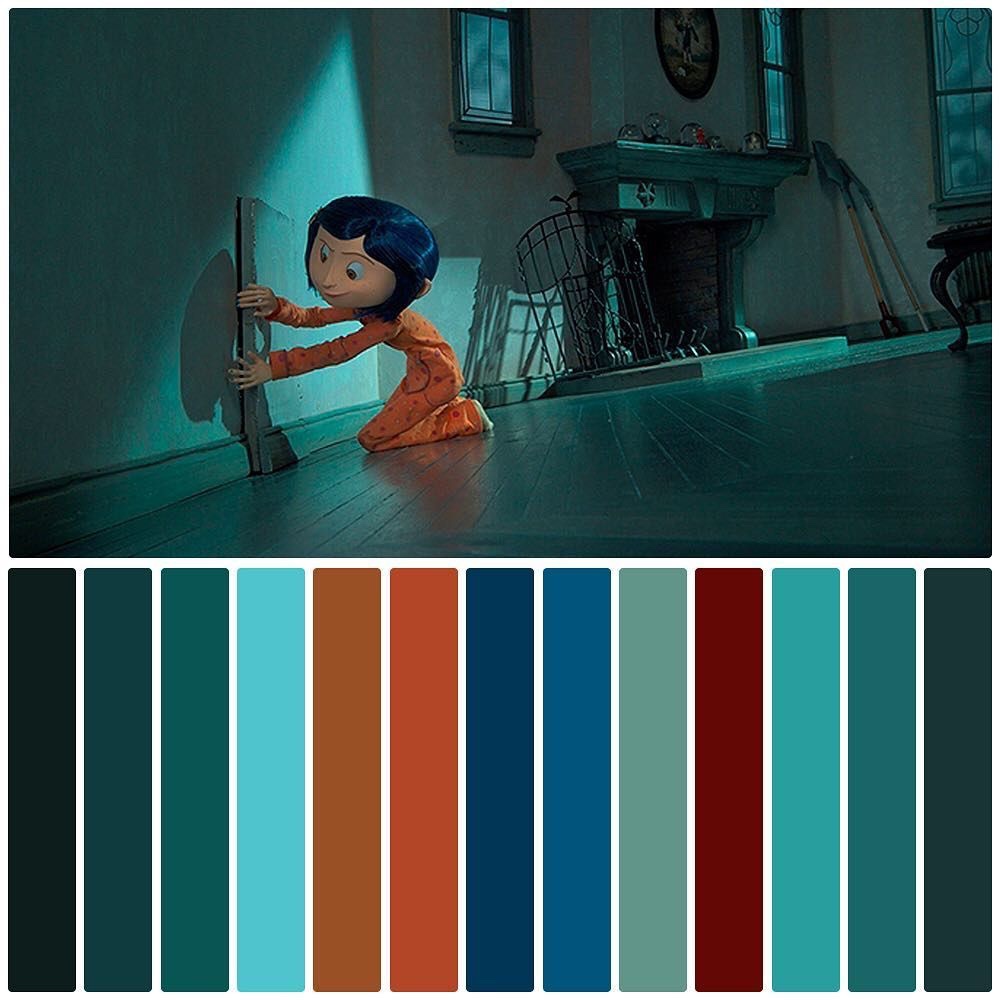
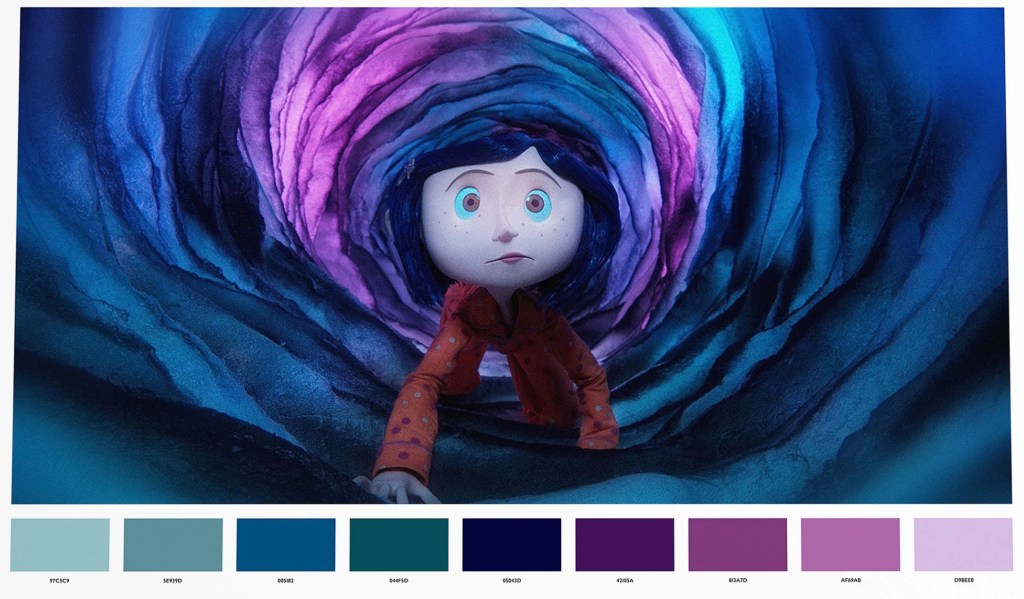
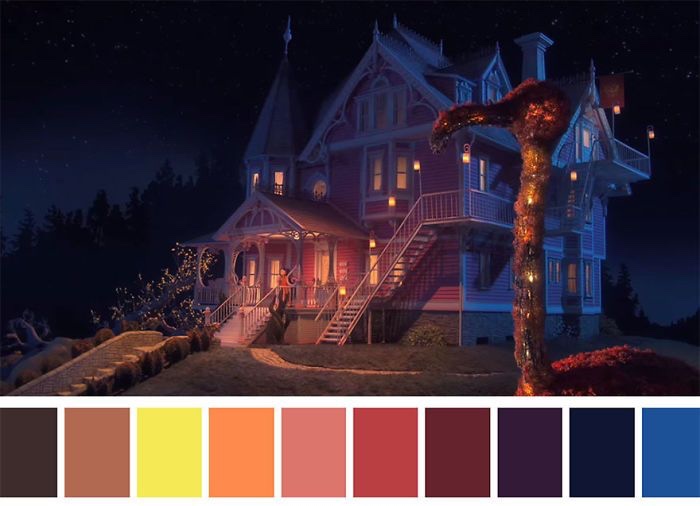
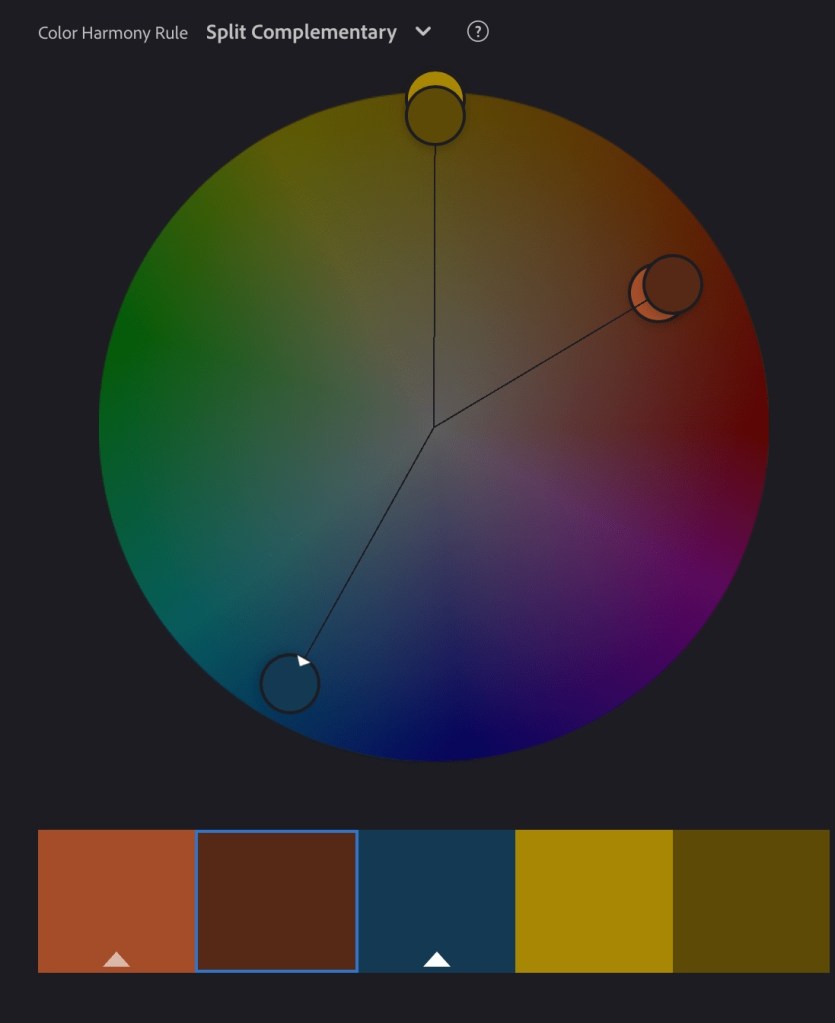
Coraline also wears orange pyjamas at night. I noticed a lot of strong use of yellows, blues and oranges. This could suggest a ‘Split Complementary’ colour harmony rule was followed. I tried to recreate this on the left. Teal and purple were also used in foregrounds to make Coraline stand out more and to create depth.
Hidden Themes
There are many theories to suggest that Coraline may have just imagined what happened in the movie. The door she found could have symbolised her desire to escape her reality – to find a more loving home and a more exciting life. Similar to Dorothy in the 1939 fantasy/musical movie ‘The Wizard of Oz,’ Coraline seems to be having episodes where she believes she is in another world with characters who look just the ones in her own. However, at the end of ‘The Wizard of Oz,’ Dorothy wakes up in bed and realises it was all just a dream, whereas in ‘Coraline’ the protagonist never seems to escape her nightmare.

There is a lot of detail to suggest that Coraline did indeed experience what she did for real. The size of the door is oddly specific to the size of her body- as if someone created it just for her.
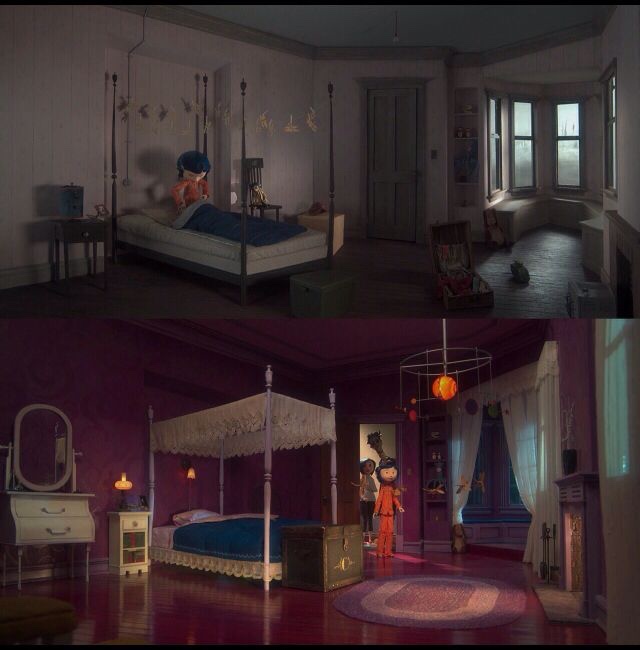
One of the most unnerving parts of the movie for me was how Coraline enters the other world using the door but can only get back by sleeping. She does in the end use the door to get back. This could suggest that everytime she slept in her other bed, she dove one layer deeper into the other mother’s constructed world. Similar to the movie ‘Inception (2010).’ Almost as if the other mother was drugging her food and slowly trying to make her dislike her own world more and more. As the movie progressed, it’s clear that the other mother was indeed kidnapping children – creating dolls and placing them in the real world which could spy on them – learning what they really wanted and creating a false temporary home for them. Similar to how a spider spins its web to trap flies and then consume them in order to stay alive.
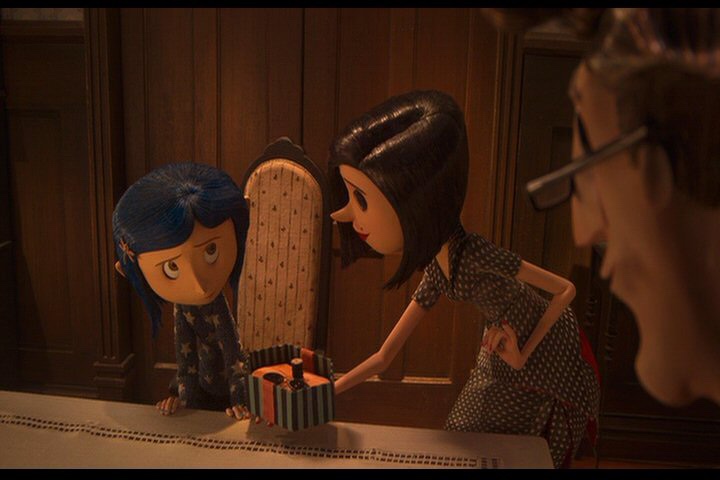
When Coraline first sees the other world she is bright and happy. But once she realises what she has to do into order to stay she becomes dark and gloomy. The Gothic themes of the movie finally start to unravel. Her desires are almost fulfilled – she has loving parents, better food and a nicer looking home. But at what price? She has to exchange her eyes for buttons and look just like everyone else in the other world – like dolls (it is later revealed that this is a trick and she will actually lose her soul to the other mother if she does this). The ‘buttons for eyes’ aesthetic most likely symbolise ‘doll-like perfectionism’ which in turn makes you blind to everything that is real, warm and natural. Essentially, the other mother creates a fake doll-house and a persona for heself in order to blind Coraline into thinking her real parents and home are not good enough. She essentially uses Coraline’s desire to escape to fuel her own world.
Humankind cannot gain anything without first giving something in return. To obtain, something of equal value must be lost. That is alchemy’s first law of Equivalent Exchange.
TvTropes.org

In the end, Coraline does keep her eyes and finally gets to see the other mother for what she truly was. She obtains what she truely desires by realising that she had it all along – ‘there’s no place like home.’ She escapes the evil clutches of the other mother, locks the door to the other world and throws the key into a well (the well could represent her subconscious mind and the key could have symbolised her desire to escape). The other mother and the other world definitely represented the horrors of growing up and learning to see the world for what it really is and not just what you want it to be. For a children’s movie, Henry Selick did an excellent job creating a story with strong morals and lessons for young minds to explore – Coraline was a character that everyone could follow and feel emotions with.
Thank you for reading my blog post.
I try to fix errors and add more to posts so feel free to let me know if you see any mistakes and I will amend them as soon as I can..
 AnmolGjr Movies